To explore the thinking behind the building design of St. Luke's Early Learning Community in Chapman, we spoke with Belinda Barnes, Senior Associate at COX Architecture, the lead architects on the project.
Belinda shared insight into the early design thinking, the influence of Reggio Emilia principles, and how the building responds to its community, site, and landscape. The conversation reveals how careful architectural decisions can shape a warm, connected environment where children, educators, and families feel a strong sense of belonging.
Tell us a bit about the initial design brief.
The initial brief for St. Luke’s Early Learning Community in Chapman emerged from a broader site investigation for the Anglican Diocese, exploring a range of potential uses. An Early Learning Centre was identified as the most appropriate outcome, with a strong emphasis on creating a place where the wellbeing of both children and staff sits at the heart of the learning environment.
From the outset, the brief called for more than a typical childcare facility. It needed to incorporate a community commons and reflect the Anglican focus on connection and community-building, alongside principles of the Reggio Emilia learning philosophy—prioritising curiosity, interaction, and engagement with the environment.
The site itself played a significant role in shaping the brief. Its steep topography, combined with its position between Chapman Shops and Chapman Primary School at different levels, established clear requirements around access, parking, and circulation. This naturally led to a two-storey solution.
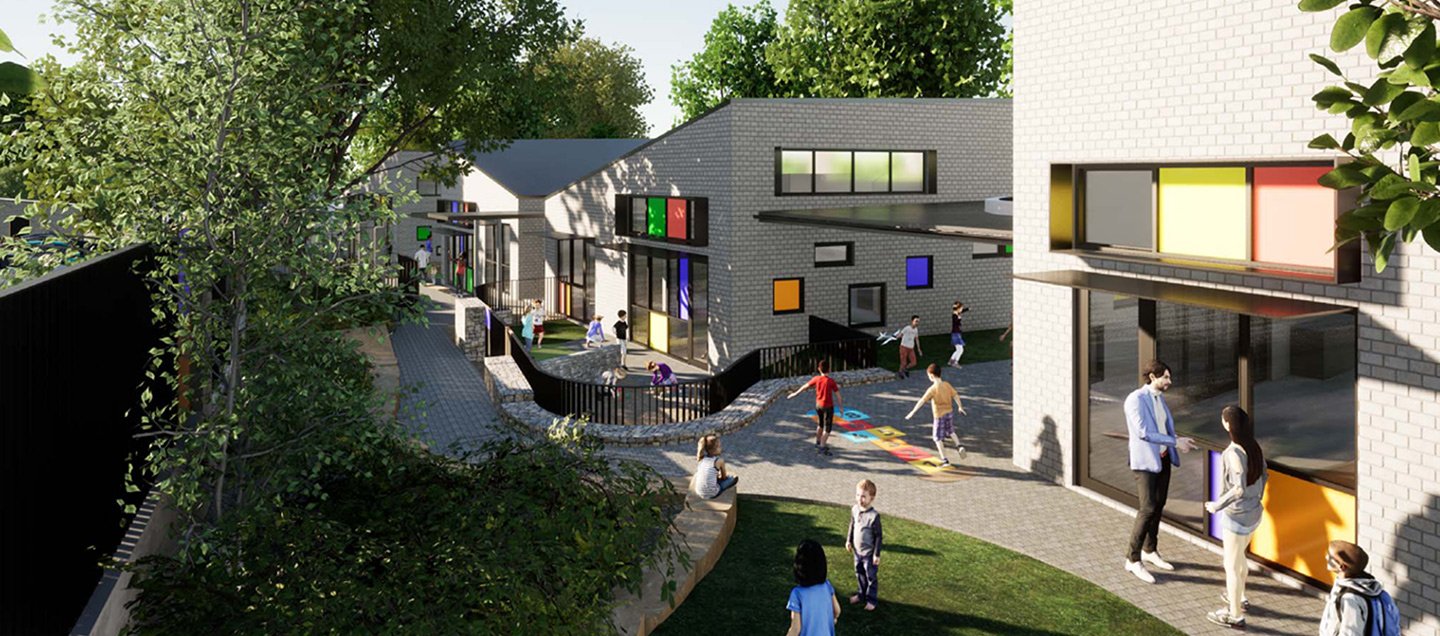
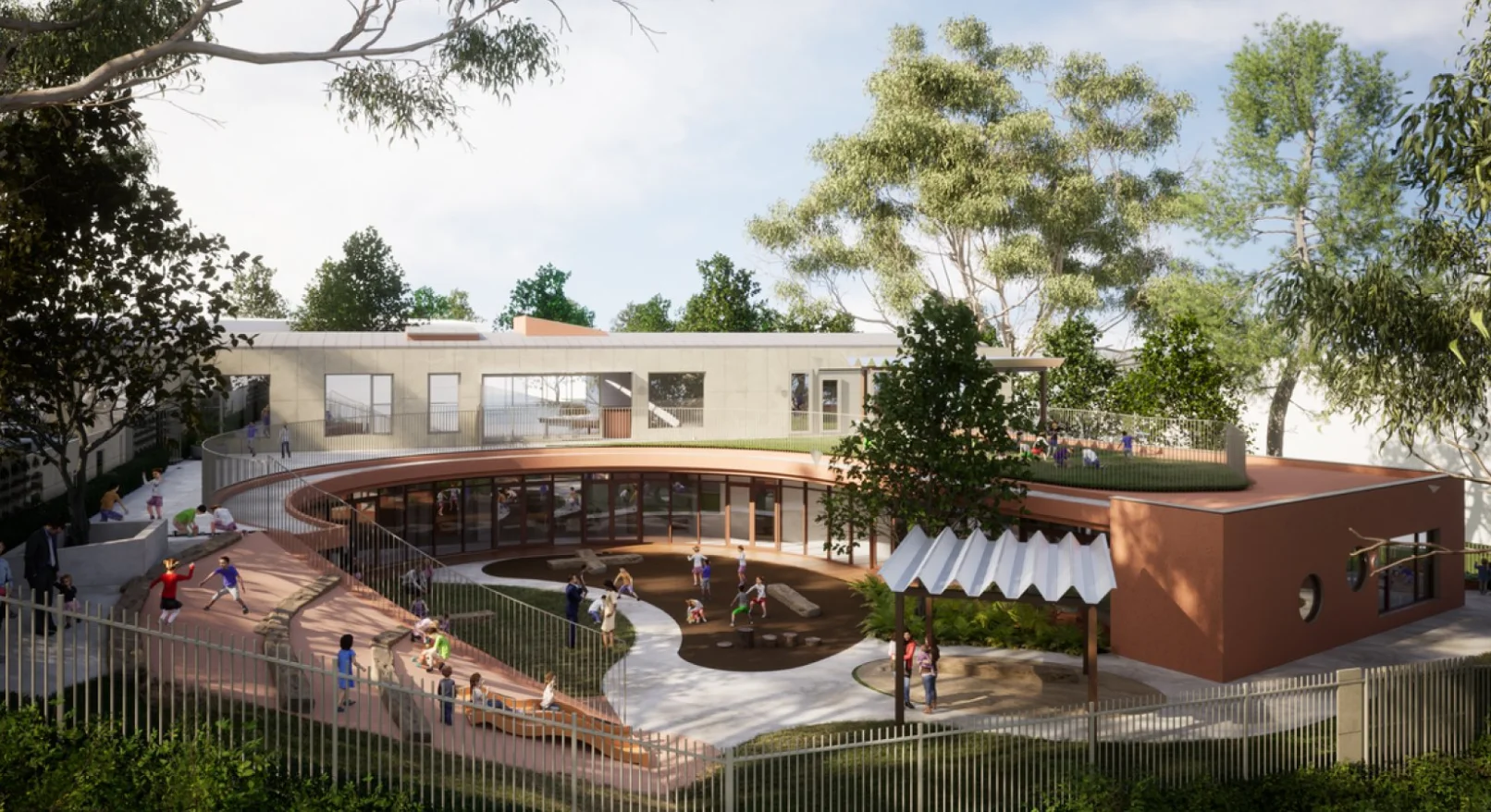
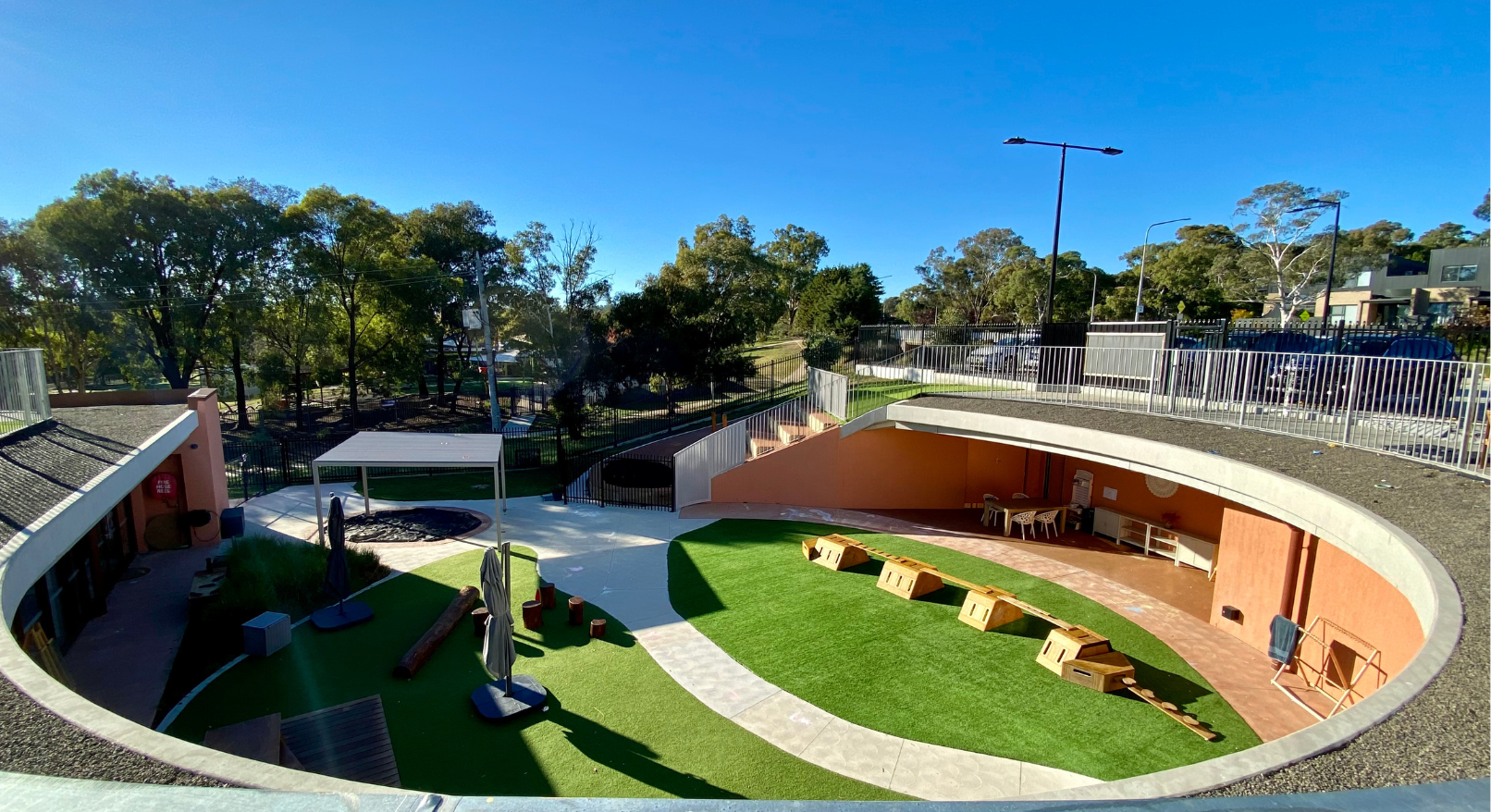
Early design investigations focused on how to organise the centre across two levels while maximising natural light and fostering meaningful interaction—both between children and with nature. The building’s placement responds directly to its neighbours: the upper-level entry aligns with the shops, creating a strong pedestrian connection, while the lower level engages with the primary school. A circular form was developed to open toward the east, enhancing visual connections and allowing the landscape to rise through the site, stitching the two levels together into a continuous, connected environment.
How did it evolve during the early concept stages?
During the early concept stages, the design evolved through a close reading of orientation, community, and connection—each becoming a driver of the project.
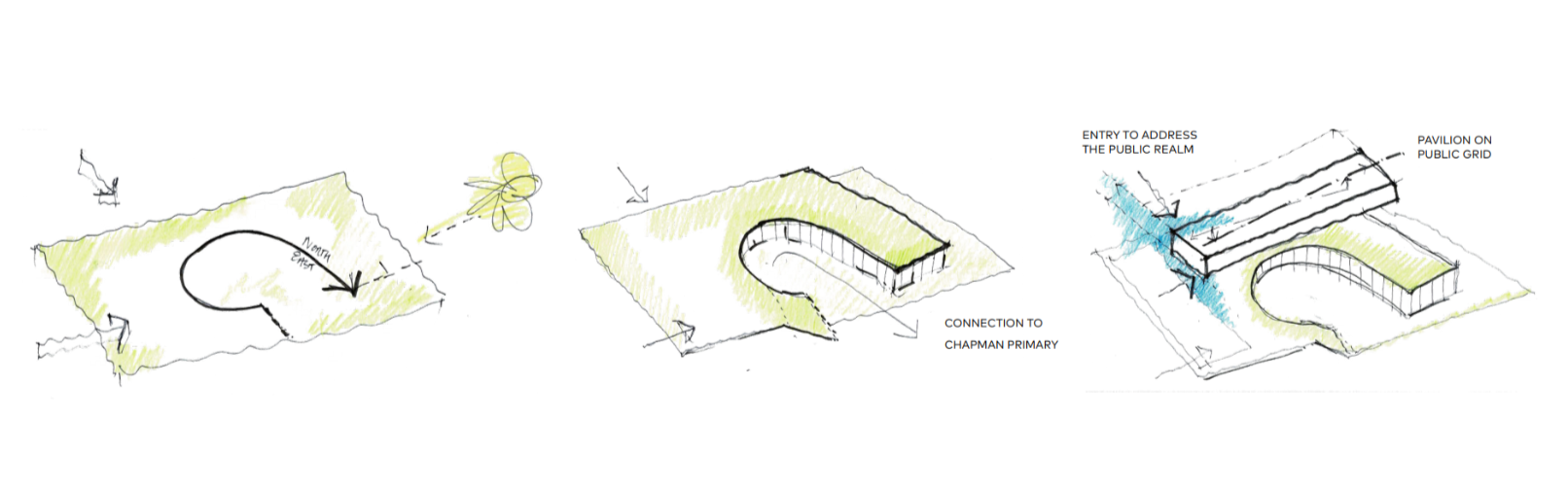
Orientation was one of the first moves. We identified the portions of the site with the best northern and eastern solar access and prioritised these areas for shared, high-energy uses. This led to the idea of a centralised gathering space, expressed through a circular geometry—both a practical response to light and a symbolic one, reinforcing unity and community.
From there, the concept of community was developed through the landscape itself. The ground plane is folded up and around the building, creating a protective, embracing form that connects the lower and upper levels. This move allowed the project to work naturally across the steep site—establishing a more public interface at the upper level, aligned with the street and shops, while strengthening connections at the lower level to the adjacent primary school. The circular planning also enables playrooms to face one another, encouraging interaction and a shared sense of belonging.
Connection became the third key layer. A pavilion element was introduced at the upper level, oriented north and aligned with the public realm, clearly marking the building’s address and entry. Internally, vertical connections were carefully integrated to link the two levels—bringing together circulation, shared dining, and flexible learning spaces—so the building operates as a cohesive, connected environment rather than two separate floors.
Reggio Emilia places strong emphasis on “environment as the third teacher.” How did you translate that idea into the building’s spatial layout and material choices?
The Reggio Emilia philosophy places strong emphasis on collaboration, interaction, and the role of environment in shaping learning. We translated this into the design by treating the building and landscape as an active participant in the learning experience.
The scheme is organised as a grounded form, with the landscape folded across two levels and wrapped around a central courtyard. At the lower level, the early learning play hubs are arranged in a circular layout, allowing children to maintain visual connections with neighbouring spaces. This fosters a sense of awareness, belonging, and social development, as children can see and engage with the broader community around them.
Materially, the palette is warm, tactile, and honest—chosen to feel natural and inviting, while supporting sensory engagement. Openings, thresholds, and connections to the outdoors are carefully considered, ensuring that light, air, and landscape are ever-present. In this way, the environment is not just a backdrop, but a teaching tool—encouraging exploration, interaction, and curiosity in everyday use.
The project includes a series of common areas and interconnected play hubs. What design strategies were used to support flexible, discovery‑based learning across these spaces?
The project brings together a series of common areas and interconnected play hubs, designed to support a range of learning styles and moments throughout the day. Within the ground floor play hubs, spaces are deliberately varied—ranging from larger, open areas that encourage group interaction to smaller, more intimate settings that support quiet, focused activity.
This diversity allows children to move fluidly between environments, supporting self-guided, discovery-based learning and giving them a sense of agency in how they engage with the space. Visual connections between areas further reinforce a sense of openness and community, while still allowing for moments of retreat.
Natural light plays a key role in shaping these environments, enhancing comfort and wellbeing, while a warm, earthy material palette creates a calm and inviting atmosphere. Together, these strategies create flexible spaces that can adapt to different activities, fostering curiosity, exploration, and social learning.
The brief highlighted the importance of connection between indoors and outdoors. What were the key design elements that allowed you to maximise natural light, ventilation, and transitions to outdoor play areas?
The building is organised around a central courtyard, with play hubs carefully positioned to capture eastern morning sun while benefiting from natural cross-ventilation. This arrangement ensures that key learning and communal spaces are filled with soft, consistent daylight and fresh air throughout the day.
Along the northern edge, the form extends to create a series of layered internal and external environments, each offering different solar and ventilation conditions. Full-height glazing, operable openings, and direct access points allow spaces to flow seamlessly into outdoor play areas, reinforcing a constant connection to landscape, light, and air.
How did you approach the design of the play courtyards to support different age groups while maintaining a cohesive, safe, and engaging environment?
The outdoor spaces are zoned to respond to different age groups while maintaining a unified design language. Dedicated areas for babies are located on the upper level, providing a secure and controlled environment tailored to their developmental needs, while still allowing connection to the broader centre.
For older children, play areas are located at the lower level, directly connected to the central courtyard and learning spaces. These areas encourage exploration and independence, with clear sightlines ensuring safety and supervision. Across both levels, a consistent landscape approach ties the spaces together, creating a cohesive and engaging environment for all users.
What were the biggest design challenges presented by the site, such as slope, wind, or residential adjacency, and how did you resolve them?
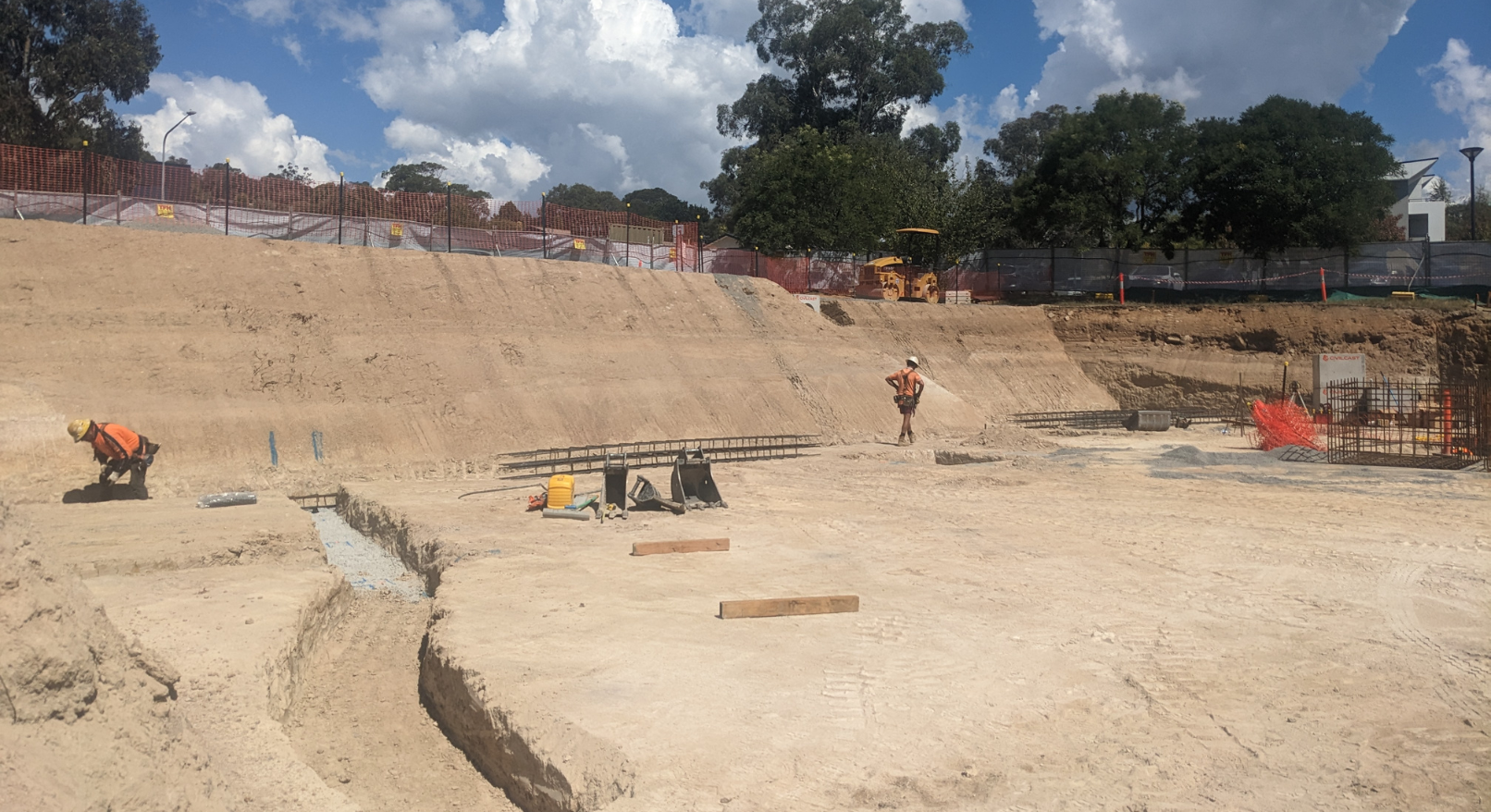
The steeply sloping site was one of the primary challenges, particularly in balancing accessibility, safety, and functional planning. Rather than resisting the topography, the design works with it—splitting the building across two levels and using the landscape to mediate between them.
This approach minimises the need for excessive internal stairs while maintaining clear, safe circulation. It also allows the building to connect meaningfully to its neighbours at different levels, including the adjacent shops and primary school, while managing overlooking and maintaining a respectful relationship to the surrounding residential context.
The materials palette includes rendered masonry, lightweight cladding, glass. What drove those decisions, and how do they support the building’s character and function?
The material palette reflects the dual nature of the building. The lower level is expressed as a grounded, protective form in rendered masonry with earthy tones. This element wraps the courtyard and incorporates deep apertures that create sheltered, cave-like spaces—supporting both play and retreat while reinforcing a strong connection to the landscape.
Above, a lightweight pavilion responds to the suburban scale, presenting as a more refined and open structure. This upper level accommodates public and administrative functions, prioritising clarity, safety, and ease of access. Generous glazing and a warm timber-lined ceiling bring continuity and softness to the interior, while drawing natural light deep into the building and guiding users toward the central Commons.
The ELC aims to be a community space for both children and parents. How did you design for parent gathering, staff experience, and broader community connection?
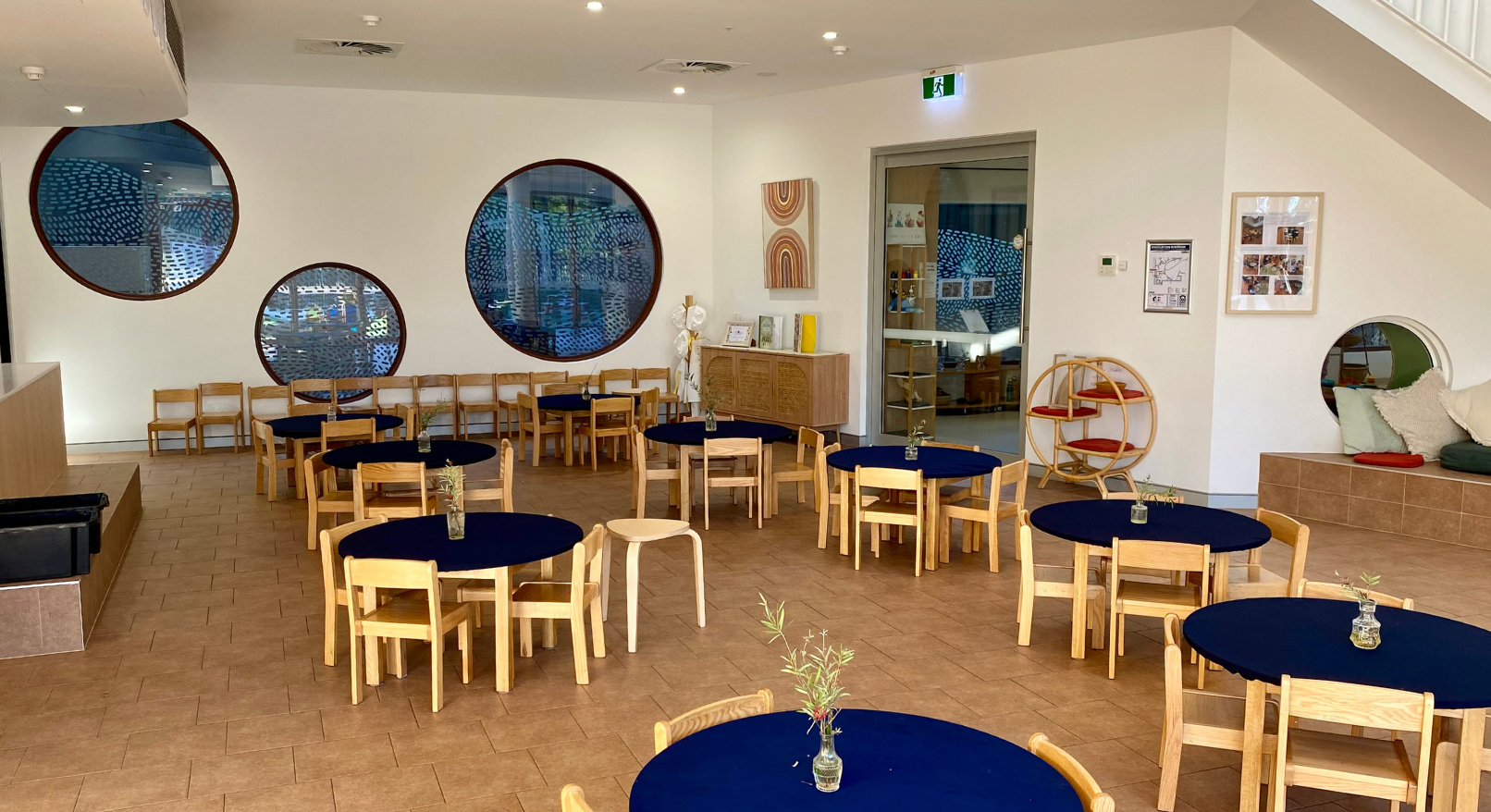
At the heart of the project is the Commons—a flexible, multi-purpose space designed to support daily interactions as well as broader community use. It is connected by a light-filled stair that encourages pause and informal exchange during drop-off and pick-up times, encouraging to foster a sense of community among families and staff.
The Commons accommodates play, learning, dining, and parish gatherings, and maintains a direct relationship with the central courtyard—allowing parents and educators to remain visually connected to children and activities. Clear circulation and intuitive flow support smooth transitions, making the experience easy and welcoming for all users.
What aspects of user experience were most important for you to get right?
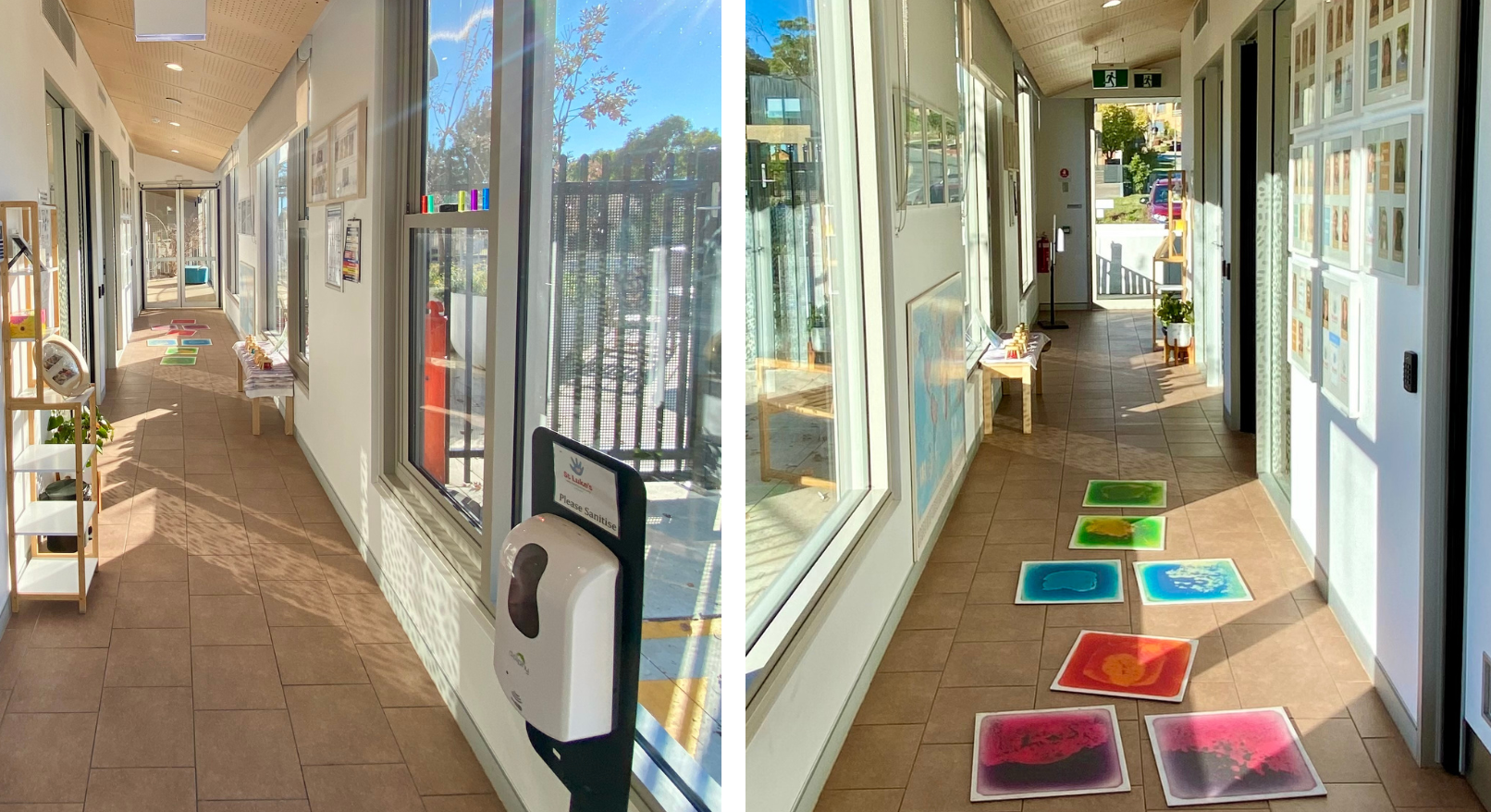
Clarity and ease of movement were key priorities. The building is designed to be intuitive to navigate, reducing stress during busy moments like drop-off and pick-up. Safety is embedded throughout, with clear sightlines, controlled access points, and strong visual connections between spaces.
The use of natural light and organic circulation routes plays an important role in shaping the experience—creating an environment that feels engaging, supports wayfinding, and encourages curiosity and exploration. These elements help the building feel both legible and inviting for children and adults alike.
Equally important was ensuring staff are supported through functional, comfortable spaces that respond to their day-to-day needs, balancing operational efficiency with a positive and uplifting environment.
The brief required flexibility to adapt as early‑learning models change. How does the building’s design enable long‑term adaptability?
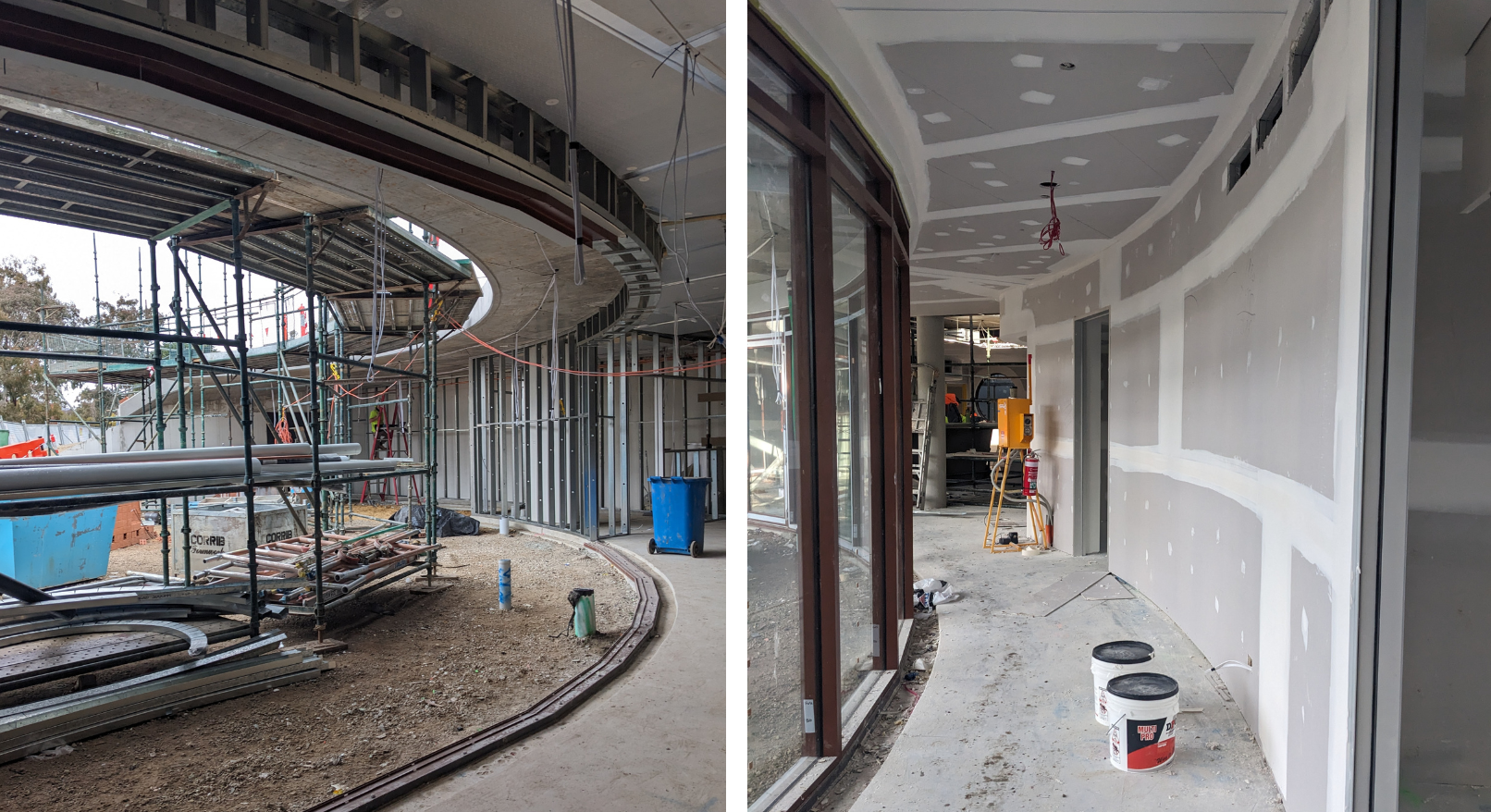
Flexibility is embedded in the planning of the play hubs and shared spaces. Playhubs are designed to accommodate a range of age groups and activities, allowing the centre to evolve over time. Operable connections between spaces enable Playhubs to expand or contract as needed throughout the day, supporting different learning modes while maintaining clear supervision.
This approach ensures the building can adapt to changing educational models and community needs without requiring significant physical alteration.
Looking back, what are you most proud of in the final design of the building?
One of the most rewarding aspects of the project is the way the design fosters connection. Children are not confined to isolated rooms; instead, they remain visually and physically connected through shared spaces, circulation, and the central courtyard.
This level of connectivity is intended to support the development of a sense of community—encouraging an understanding of others and a child’s place within a broader group. On a day-to-day basis, the layout allows opportunities for siblings and friends to see and interact with one another, helping to build relationships and social confidence from an early age.
It is hoped that the space enables a nurturing, community-focused environment for the youngest members of society—supporting social development through awareness, interaction, and a strong sense of belonging, while extending these connections to families and the wider community.
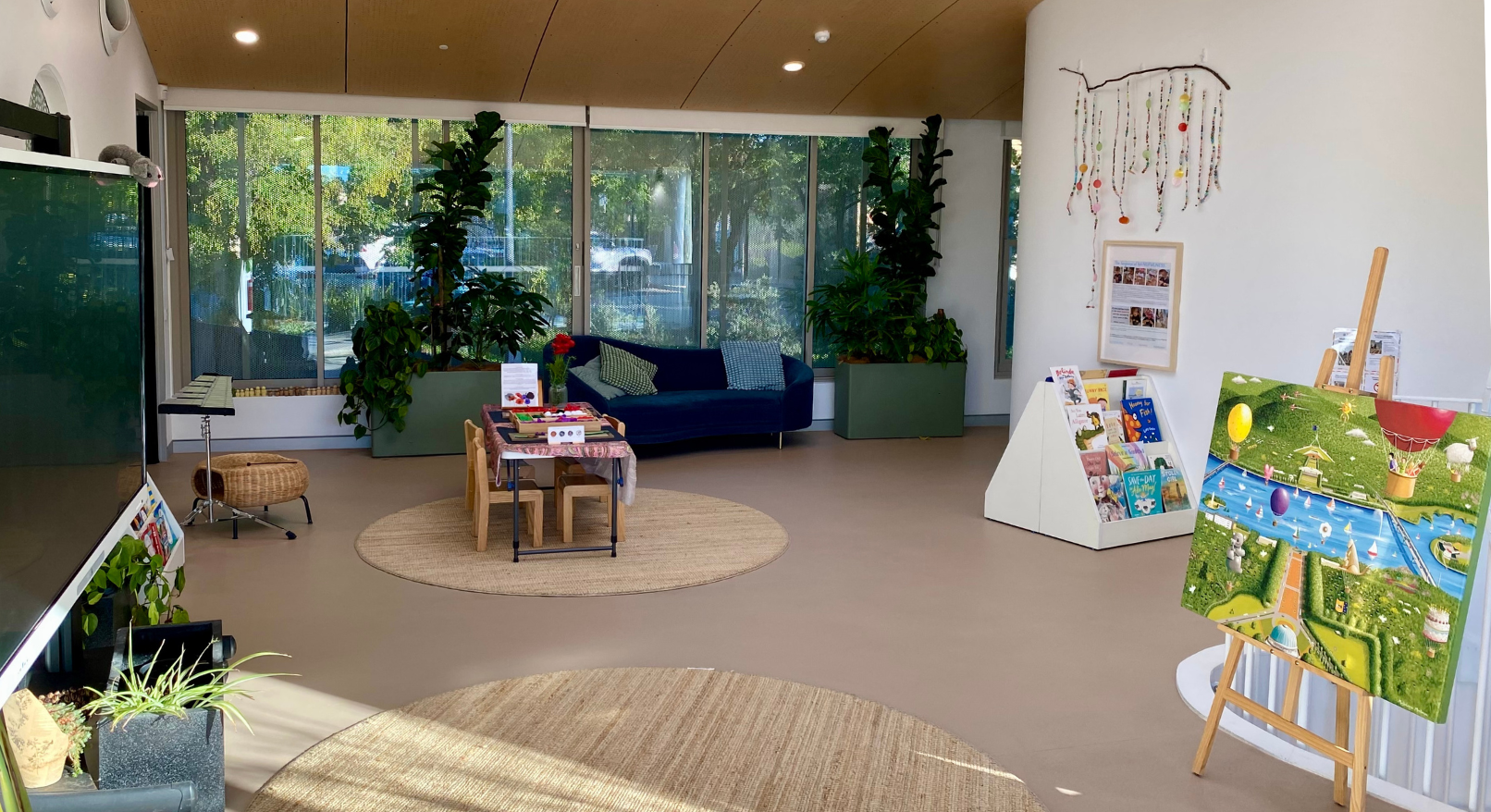
What do you hope children, educators, and families feel when they experience the space for the first time?
A sense of warmth and welcome.
The environment is designed to feel intuitive and comfortable—reassuring for parents, accessible for children, and supportive for educators. Above all, we hope it feels like a place where people can connect easily, settle in quickly, and feel part of a community.
It’s clear from our conversation with Belinda that the building has been designed with genuine care and intention. Every element—from the way the building responds to its site, to how children, educators, and families move through and share the space—has been carefully considered to support connection, wellbeing, and everyday moments of learning.
The result is an environment that feels calm, welcoming, and deeply human: a place shaped not just by architectural skill, but by an understanding of how spaces can nurture belonging and community from the very first day.