Recognising Learning From the Very Beginning
At St Luke’s Early Learning Community, we hold a deep belief: babies are learning all the time. Even before they can talk, walk, or express themselves clearly, babies are already forming ideas, testing theories, and developing the dispositions that will shape who they become.
So often, society underestimates what babies are capable of. We imagine learning begins when a child can “do” something that looks like learning. But the truth is far richer, far earlier, and far more extraordinary.
Dispositions Begin Long Before Skills
When we think of grown‑up professions, like a lawyer for example, we often picture specific skills: persuasion, reasoning, persistence, negotiation. Yet these dispositions don’t appear suddenly in adulthood. They begin in infancy.
A toddler passionately arguing their point, standing their ground, explaining their version of events with remarkable confidence… these are early signs of the same dispositions a lawyer uses every day:
- Confidence in their perspective
- Curiosity about how things work
- Persistence in solving a problem
- The ability to communicate emotion and intent
These traits don’t arrive fully formed at age 18. They begin at 8 months, 18 months, 2 years… and they grow because someone nurtures them.
When we recognise these early dispositions, not just the surface behaviour, we see babies and toddlers as capable, competent learners who are already on their way to becoming thoughtful, articulate human beings.
Learning Begins With Wonder
Babies explore their world by reaching, tasting, watching, listening, and experimenting. What looks like simple play is actually the foundation of scientific thinking.
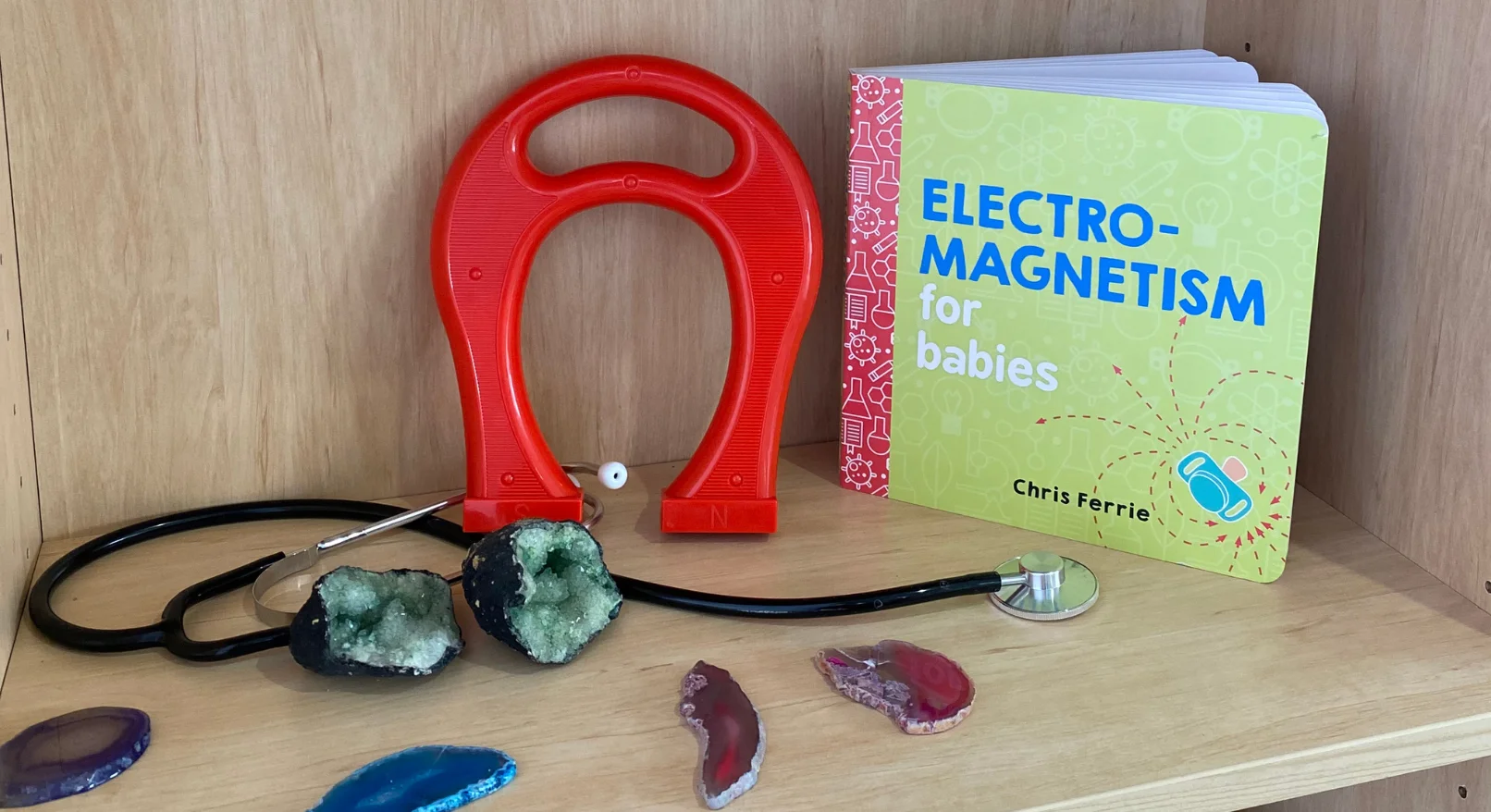
This is why we carefully choose materials, books, and experiences that honour babies’ natural curiosity. Books like "Electromagnetism for Babies" by Chris Ferrie remind us that even the youngest children are wired for inquiry.
Written by a real physicist, this playful board book takes a big scientific idea, magnets, charges, opposites attracting, and presents it with colourful simplicity. And while the humour delights adults, the concepts genuinely invite babies to explore:
- cause and effect
- relationship between objects
- patterns in the world
- how things move and interact
After all, a baby experimenting with stacking blocks, dropping spoons, or pushing toys together is already engaging with the foundations of physics. Why not nurture that curiosity with real, meaningful ideas?
Nurturing Capable Learners From Day One
When we treat babies as competent learners, not empty vessels, we:
- listen more closely
- offer richer language
- provide materials that spark inquiry
- model meaningful problem‑solving
- respect their ideas, frustrations, and discoveries
These early experiences build the foundation for:
- identity
- confidence
- persistence
- empathy
- communication
- critical thinking
And they begin in the very first years of life.
At St Luke’s, we recognise that babies don’t need to “grow into” being learners. They already are. Our role is to nurture, honour, and celebrate the brilliant learning happening from the very beginning.